
The Hidden Cost Ledger of Tactical Gear Procurement: Why Multiple Suppliers Quietly Eat Your Profit
Many tactical gear suppliers? Hidden costs beat unit-price savings.

Anyone doing tactical gear procurement has probably been in this situation: you need to launch a full product line, red dot sights, rifle scopes, magnifiers, mounts, weapon lights, lasers, night vision, kill flash honeycomb covers, the works. To push unit prices to the floor, you go to factory A for red dots, B for mounts, C for lights, D for lasers, and before you look up the supplier list has seven or eight, even ten names on it.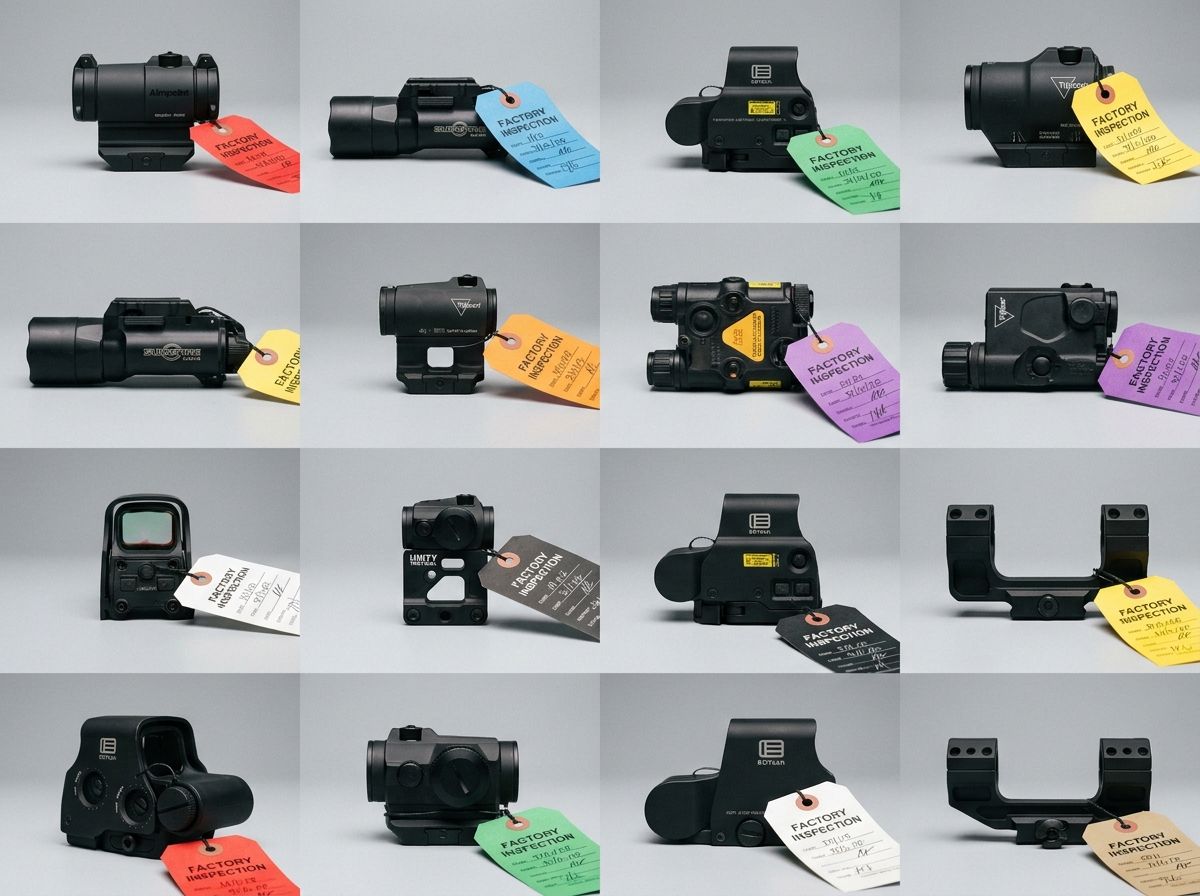
Each unit price did get pushed to the bottom, so it looks like you saved. But where the real money leaks is not on the unit price line. Seven or eight suppliers means seven or eight contact windows, seven or eight sets of specs to confirm, seven or eight lead times to align, seven or eight shipments to send separately, seven or eight customs clearances to pass. Add these up and they usually outweigh whatever you shaved off the unit price.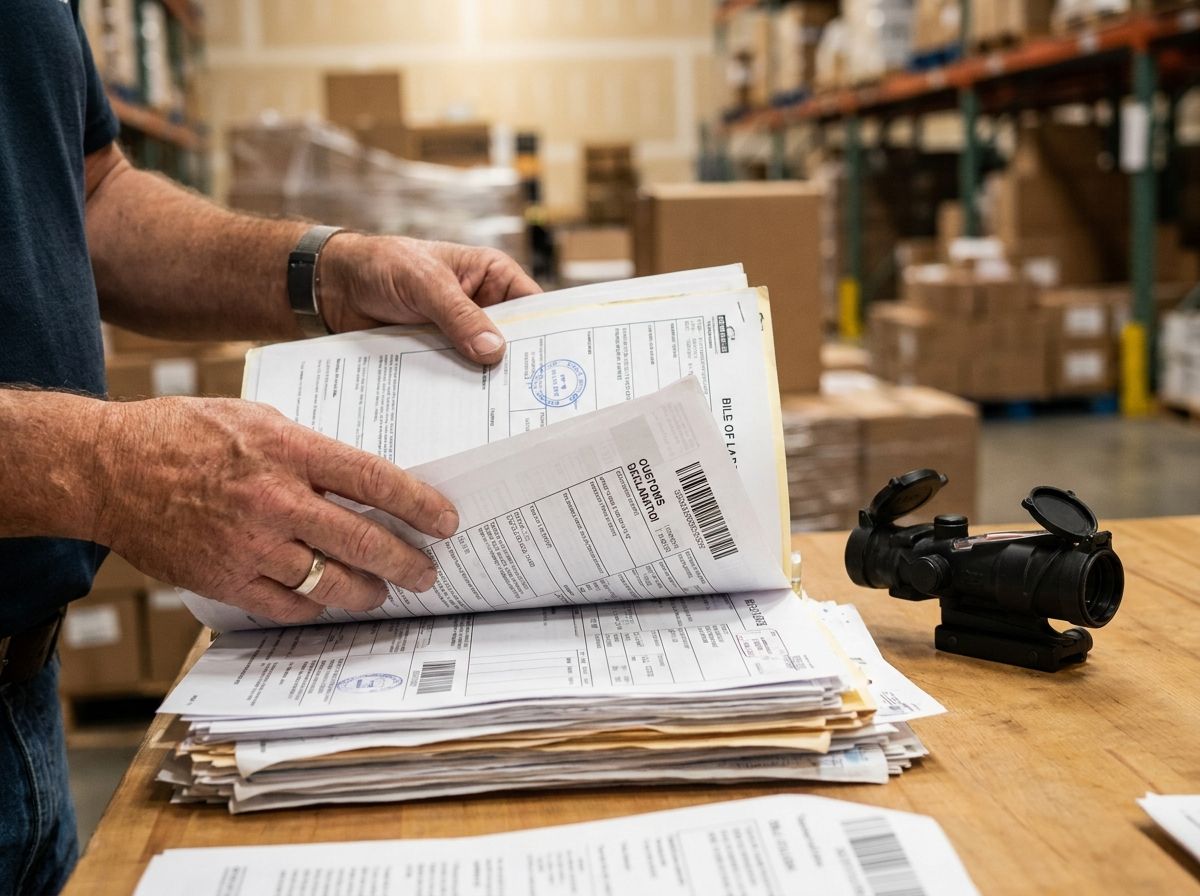
Few people sit down and do this math. Let's try.
The hidden cost of multiple suppliers is higher than you think
Take communication first. Every extra supplier means spec confirmation, sampling, inspection, and after-sales get repeated one more time, and with time zones and languages on top, it doubles again. One person handling three or four suppliers can still cope, but at seven or eight you are basically putting out fires, and firefighting is exactly when wrong orders, missed confirmations, and garbled specs happen. Those mistakes all turn into money.
Quality works the same way. Different factories have very different craftsmanship and yields; factory A's batch might be premium while factory C's same run turns out a pile of defects. Worse is mismatched standards: the red dot reaches IPX7, the weapon light only IPX4; the rifle scope uses 7075 aluminum, the mount gets swapped for a generic alloy. The reliability of the whole setup gets pulled down by its weakest link. Customers do not judge a single accessory, they remember whether the whole set is trustworthy.
Lead time is worse. Six factories have six different lead times, red dots 30 days, lights 45 days, mounts 20 days, night vision 60 days. You have to wait for the slowest one before you can ship a complete set, and if one slips, everything waits. In peak season when production schedules collide, just chasing progress and adjusting lead times eats a big chunk of procurement's time. Time is cost too.
Logistics and customs is the most easily ignored line, and the most concrete. Multiple suppliers shipping separately means multiple ocean shipments, multiple customs declarations, multiple sets of document fees. Six categories split into six shipments means fixed fees collected six times; combined into one shipment, collected once. Many procurement teams have never counted this, yet it can easily exceed what bargaining saved.
After-sales finger-pointing needs little explanation. Mount doesn't fit the red dot, weapon light and laser switches conflict, colors don't match, the moment a combination problem pops up, the mount factory blames the red dot, the red dot factory blames the mount tolerance, you are stuck in the middle, and the customer is waiting. After-sales disputes are hard to quantify, but customer loss is real.
Then there is the combination experience. Tactical gear is a system, the red dot, mount, magnifier, and light have to work together. Spread across several factories with nobody designing the whole, the result feels cobbled together: mount height is off, colors mismatch, turrets point different ways. The customer picks it up and it feels cheap, and selling it at a premium gets hard.
Put it all together: communication, quality, lead time, logistics, after-sales, combination experience usually add up to more than what bargaining saved. The common illusion in procurement is that low unit price equals saving money, when what you should watch is the total ledger. A few cents cheaper per unit while leaking hundreds or thousands in hidden costs is the most common trap in multi-supplier procurement.
Where one-stop actually saves
Once the hidden costs are clear, the value of one-stop becomes clear too. What it saves is not the unit price, it is that ledger above.
The most direct one is communication. One supplier, one window, one process, specs and sampling and inspection and after-sales all on one line, with a visibly lower error rate. Procurement no longer switches among seven or eight suppliers, and the freed-up energy goes into selection and customers.
Quality gets unified too. A supplier with a complete quality system applies one standard across all categories, so you don't get a short board like IPX7 red dot with IPX4 light. What the customer feels is that the whole set is reliable, not that some parts are good and some are just okay.
Lead time and logistics are where the biggest savings are. One supplier coordinates production internally, so lead times line up naturally. Even more important, shipments can be consolidated: all categories into one shipment, one ocean freight, one customs clearance, one set of documents, fixed fees counted once. This is the biggest hidden cost in the multi-supplier model, and the most direct saving from one-stop.
Combined design is another often-overlooked point. A one-stop supplier can design from the perspective of the whole system, tooling a mount specifically for your red dot, aligning the switch logic of the light and laser, unifying colors and appearance across categories. This kind of coordination is impossible when scattered across multiple factories.
After-sales gets simpler too. One window for problems, clear responsibility, fast resolution, no endless buck-passing.
Finally, price. Volume that was scattered across six factories, concentrated into one, makes the total bigger, so tiered unit prices naturally come down. Stack on top the logistics saved by consolidated shipping, the labor saved by unified communication, and the rework saved by coordinated design, and one-stop on the total account is often cheaper than fragmented sourcing.
One-stop is not simply one company selling everything. Its essence is using concentrated volume and coordination to trade for lower total cost and higher reliability. For brands and distributors rolling out a full product line, this is a structural advantage, not an optional garnish.
How to tell whether a supplier is truly one-stop
One-stop has many benefits, but the precondition is that the other side is genuinely one-stop, not the kind that takes orders and then subcontracts. With subcontracting, you nominally have one supplier but in reality still face the quality variance of multiple factories, and the hidden costs are not saved at all.
A few checks. First, are the categories truly self-produced or resold? True one-stop has its own capacity covering multiple categories; fake one-stop takes orders and farms them out. Second, is the quality balanced across categories, or is the red dot great while the weapon light is a mess? Third, is there one unified quality and inspection system running through all categories, rather than each category doing its own thing? Customization capability and MOQ also need clarifying, since one-stop's value includes cross-category unified customization and consolidated MOQs. Export qualifications and trade terms determine whether shipments and documents can be consolidated, which directly affects logistics cost. And after-sales, whether one window truly covers all categories and doesn't pass the buck when something goes wrong.
In one sentence, judging one-stop is not about how many categories they sell, it is whether they can deliver those categories to you with unified standards, coordinated design, consolidated logistics, and consistent after-sales. Whoever can do that is worth entrusting a whole product line to.
If you are struggling with many suppliers
If you are planning or optimizing a tactical gear product line and want to see whether one-stop can cut your costs, you can hold the standard above up and compare. Take HANNORES as an example: the product line covers red dot sights, optics scopes, magnifiers, rifle scopes, mounts, night vision, weapon lights, laser sights, and kill flash honeycomb covers, one line, one contact window. Multiple categories run one consistent quality and craftsmanship, so the whole set has no weak-link category. It can do coordinated design and cross-category customization, tooling mounts to fit your red dot and unifying logo and color across categories. All categories can be consolidated into one shipment with one set of documents, one freight, one customs clearance. Concentrating volume earns better tiered pricing, and stacked with the saved logistics and coordination costs, the total comes out more favorable. After-sales is one window covering everything. MOQs are tiered: branding from 50 units, custom packaging from 100, custom optical components from 100, full OEM design from 200, with trade terms supporting EXW, FOB, DDU, and DDP.
For brands and distributors laying out a full product line, the value of one-stop was never a few cents off each unit, it is that the total ledger comes down a notch, lead times stay stable, quality lines up, and after-sales doesn't turn into a fight. These hidden gains are usually worth more than a unit-price discount.
Finally
Rather than wearing yourself out coordinating among seven or eight tactical gear suppliers, it is better to first work out that hidden ledger clearly. Lay out communication, quality, lead time, logistics, after-sales, and combination experience, and you will most likely find that one-stop is not paying more for peace of mind, it is structurally cheaper, more stable, and more reliable.
If you have a product line to plan, or you are already dragged down by multi-supplier coordination, bring your category list and let's talk about how much handing that line to one window could take off your total procurement bill.